
Pawnee County Wanted List Status
The county website has no wanted-fugitives page of its own. Its official Sheriff Quick Links sends people outward instead: Kansas Most Wanted, Crime Stoppers, VINE, Offender Watch, and the Kansas Department of Corrections. None of those adds up to a Pawnee-only roster. So there is no local count to cite. There is no photo policy, update schedule, or fixed set of listing fields either.
A statewide page can feature cases from agencies across Kansas while leaving most local warrants out of view. So a missing name proves nothing. The issuing court and the agency serving the warrant remain the places to confirm current status.
Kansas Most Wanted for Pawnee
Kansas Most Wanted is the official statewide list. Pawnee County points to it. It covers selected Kansas cases rather than serving as a full warrant index for any one county. An entry might carry a photo and details from the investigating agency. Tips go to the agency named in the notice or the state tip channel. The source itself confirms any later change in status.
The county has no list of its own. That makes copying names into a local roll a bad idea. Copies drift from updates and go stale fast. Read the official page live. The current notice there controls.
| Field | How to read it |
|---|---|
| Name and image | Identity aids supplied for a selected statewide notice; confirm the full entry. |
| Seeking agency | The agency tied to the case, which may not be Pawnee County. |
| Alleged offense | The stated basis for seeking the person. |
| Description | Identification details that may change or resemble another person. |
| Tip instructions | The official destination for information, never permission to make contact. |
Using Pawnee Wanted Notices
A wanted notice exists to funnel useful information to the agency named on it. It is not a license for amateur detective work. Read the whole notice. Note the agency and the date. Keep the official source open so an update is not missed.
- Open the official Kansas list through the county quick-links page and confirm that the state is Kansas.
- Read the complete entry, including agency, warning, and tip instructions. Do not rely on a copied post.
- If recognition is possible, move to safety. Never approach or alert the person.
- Send only firsthand facts, such as time, place, vehicle, or direction of travel, to the official tip route.
- For custody context, use the official channels at the Pawnee County records hub without assuming an arrest proves a charge.
Do not publish a guess or crowdsource an identity. A similar name is not a match. Wrong identifications can put an uninvolved person in real danger. For an emergency or an immediate threat, call 911.
Pawnee Crime Stoppers Tips
Pawnee Crime Stoppers is the verified local tip channel. Callers get a code number, may stay anonymous, and can earn rewards of up to $1,000 when a tip leads to an arrest, a recovery, or a seizure. A citizen board runs the nonprofit. It is not a warrant database, though, and it cannot certify whether any warrant exists.
Pawnee Crime StoppersTip line: 620-285-3277
Larned, Kansas
Emergency: 911
Hold onto the code you are assigned. It is the key to follow-up and to any reward. Report only what you know firsthand. Leave reward decisions to Crime Stoppers, since eligibility is theirs to determine.
Note: A tip can aid an inquiry, but it does not certify a warrant or settle any question of guilt.
Check a Pawnee County Warrant
No public warrant-search portal exists for Pawnee County. The Sheriff serves warrants and other civil process. That duty creates no online index anyone can browse. For a current answer, call the Sheriff at 620-285-2211 or reach the court that issued the process. The Pawnee District Court clerk sits at 620-285-6937 in the courthouse at 715 Broadway, Larned.
The Kansas court portal can offer a public case lead. A docket is the court's event record, and a search result is not real-time warrant certification. Some records are sealed or restricted. A case can stay visible after a warrant is served or recalled. A simple name search may not reveal a warrant event at all.
- Gather the correct full name, date of birth if known, and court or case number without collecting needless data.
- Call the Sheriff for service guidance or the issuing court clerk for the court record.
- Use the Kansas District Court Records guide only as a case lead, then confirm by phone.
- For the caller’s own status, speak with a Kansas attorney or court about a lawful appearance and resolution.
- Follow official instructions. Never use search results to delay, hide, or evade service.
Pawnee Warrant Types Explained
"Warrant" is an umbrella word. It covers several distinct court commands. The exact document and the court that issued it control the situation, so a short docket label can never replace confirmation from the clerk.
| Type | General meaning | Best confirmation |
|---|---|---|
| Arrest warrant | A judge authorizes an arrest based on a matter presented to court. | Issuing court or serving agency |
| Bench warrant | A court orders action after a missed appearance or unmet direction. | Court clerk and counsel |
| Search warrant | A judge authorizes a defined search; it is not a public wanted list. | Court record when public |
| Civil process | Legal papers served by the Sheriff; not every paper calls for arrest. | Issuing court or Sheriff |
Any warrant can be served, recalled, or quashed. "Quashed" simply means the court canceled it. These status changes make screenshots and unofficial results poor final sources. Names that sound alike deserve extra care here.
Pawnee Wanted Channels Differ
The county's official menu gathers several systems under one roof, yet each answers a different question. This image from the Pawnee Sheriff Quick Links shows why the label on a source matters.
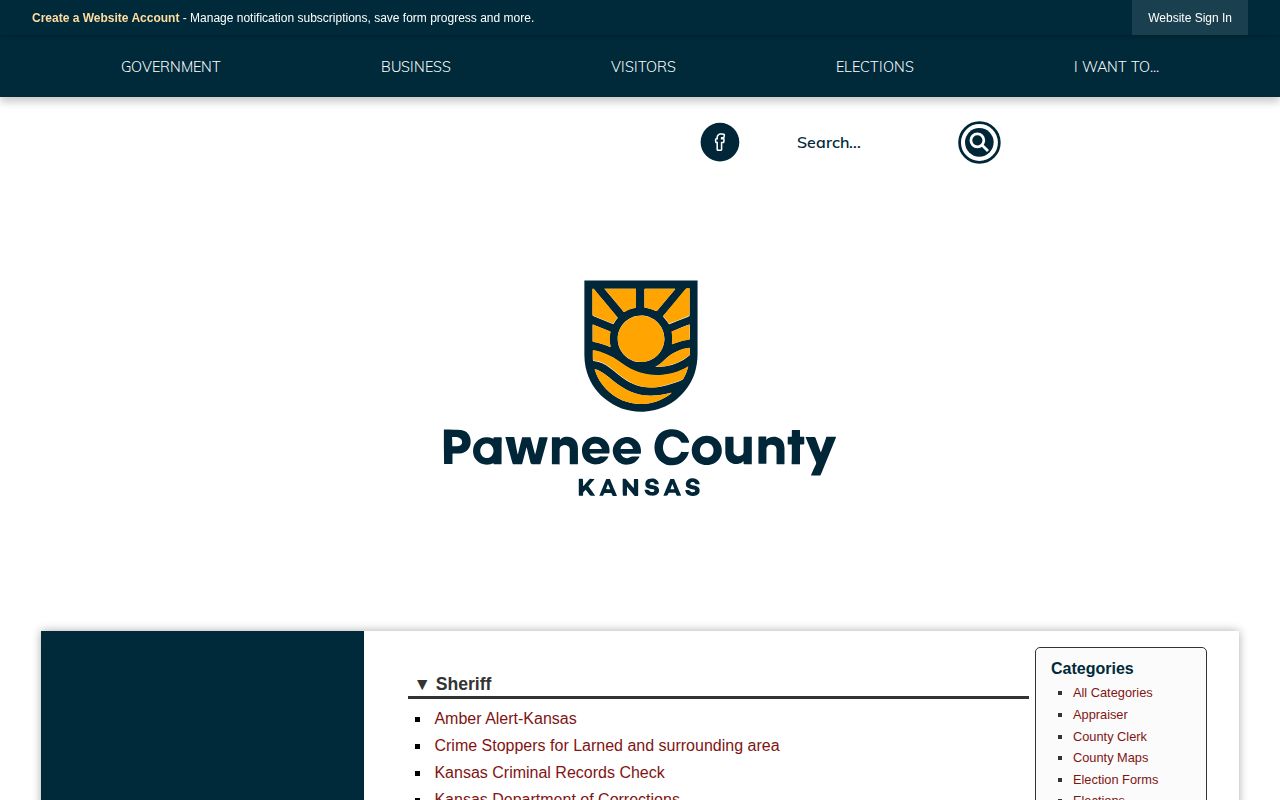
Kansas Most Wanted highlights selected statewide cases. Crime Stoppers collects tips. VINE tracks covered county-jail custody status and sends alerts, Offender Watch handles registered-offender data, and KASPER covers Kansas corrections and supervision. None of them is a complete Pawnee warrant portal.
- Warrant
- A court command authorizing a stated act.
- Booking
- Jail intake after arrest; it does not prove guilt.
- Disposition
- The recorded outcome of a charge, such as dismissal, plea, or judgment.
- Custody notification
- An alert about covered custody changes, not proof of an active warrant.
Pawnee Alerts and Social Posts
Pawnee County does not offer a booking app, a roster app, or any verified "Warrant Wednesday" feature. The Sheriff's website does link to a Facebook account. But no steady rhythm of wanted photos comes from it. Before sharing or acting on any social post, check it against the named agency and the current court docket. Screenshots travel fast. They can also outlive the incident itself. Look at the timestamp and search for a follow-up from the same official account, since a correction or resolution may have appeared after the screenshot was taken. When a post asks for tips, use the phone number or tip form on the agency's current website. Never drop private details into a public comment thread.
Each state tool answers a different question. VINE and VINEMobile cover custody in participating county jails and send notifications. They do not certify warrants. Offender Watch is a registered-offender resource, and KASPER tracks state corrections and supervision rather than fresh Pawnee County bookings. Keep those boundaries straight and the right source becomes obvious.
Custody and wanted status are not the same thing. VINE can tell you a person sits in a covered county jail while saying nothing about the warrant behind it. KASPER can show someone in state custody or on supervision after sentencing, but that is not evidence of a new Pawnee arrest. Match the tool to the question. The shortcut rarely pays off.
Resolve Pawnee Warrants Lawfully
Worried about a warrant in your own name? Start with the court, the Sheriff, or a lawyer. Counsel can walk you through the charge and the bond question. Bond simply sets the terms of release while a case is pending. Skip unofficial databases and stale social posts. Confirm the case number and court, then follow the directions you receive. If an entry looks wrong or belongs to someone with a similar name, gather identity records and raise the mismatch with the issuing office.
The court handles hearing and filing instructions. The Sheriff can explain its own contact and service process. Staff cannot always give legal advice, which is one more reason a lawyer helps sort a case-status question from a request for advice. Municipal matters add a wrinkle. Confirm the correct city court rather than assuming the Pawnee District Court holds the file.
Write down every call: the office, the date, the case number, and the next step given. Never send sensitive identity documents to an unverified email or social account. Use contact details the county or court publish themselves. A live phone confirmation beats a cached search result. Still, a certified court record matters when precise legal status is at stake, since charges can change after an arrest.